
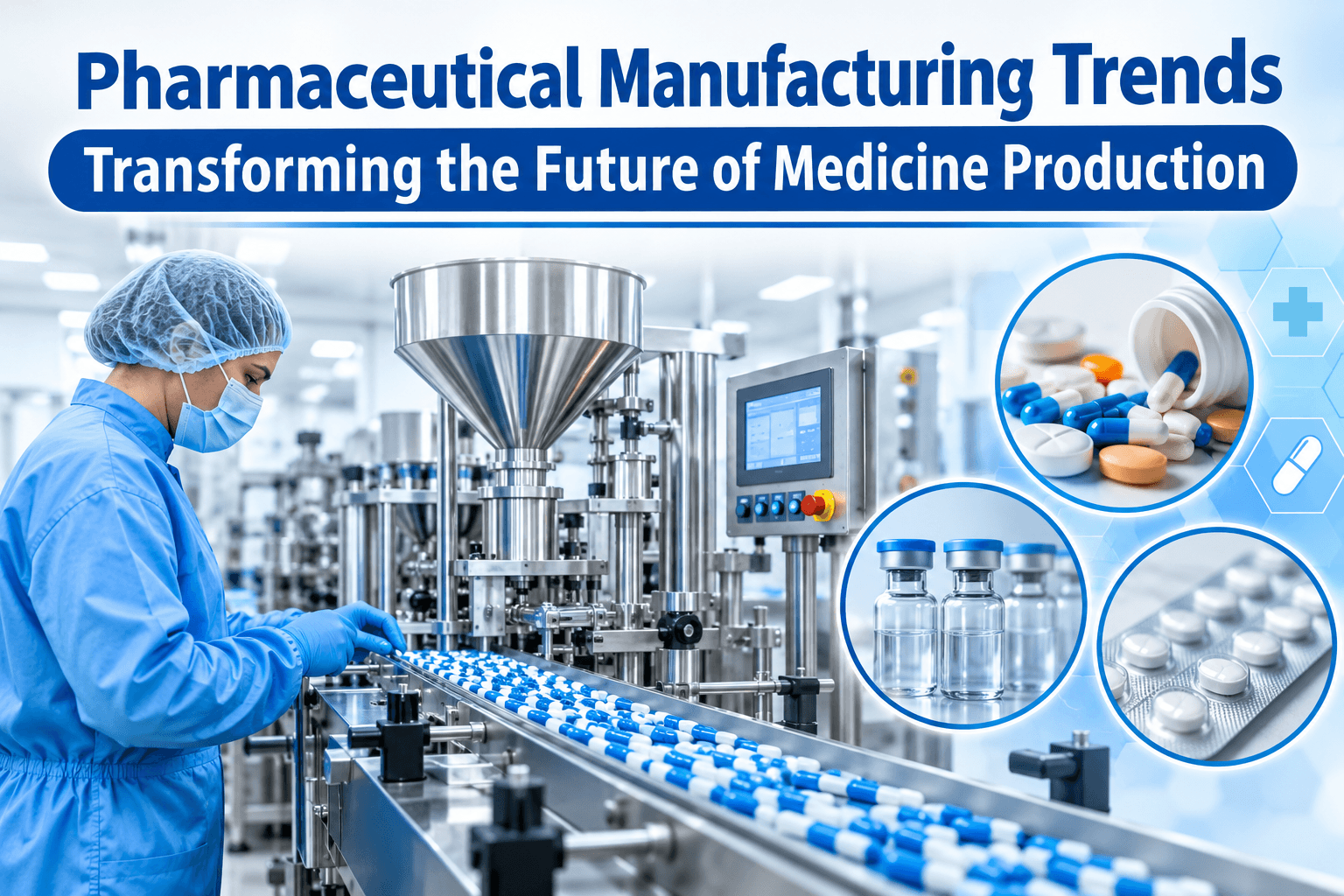
The pharmaceutical industry is undergoing significant transformation as technological innovation, changing healthcare demands, regulatory developments, and global supply chain requirements reshape medicine production. Manufacturers are increasingly adopting advanced technologies, automation, artificial intelligence, sustainable practices, and improved quality management systems to produce safer and more effective medicines.
These developments are creating new opportunities for pharmaceutical businesses while raising expectations for product quality, operational efficiency, and regulatory compliance. For businesses researching pharmaceutical manufacturing companies in india, understanding these emerging trends is essential for identifying reliable manufacturing partners and evaluating industry capabilities.
This article explores the major pharmaceutical manufacturing trends influencing the future of medicine production, their practical benefits, and the factors manufacturers must consider to remain competitive.
What Are the Major Pharmaceutical Manufacturing Trends?
The major pharmaceutical manufacturing trends include artificial intelligence, automation, continuous manufacturing, advanced biotechnology, personalised medicine, digital quality management, and sustainable production. These developments help manufacturers improve product consistency, strengthen regulatory compliance, optimise production processes, and respond more effectively to changing healthcare requirements.
How Is Automation Transforming Pharmaceutical Manufacturing?
Automation is becoming an important part of modern pharmaceutical production. Manufacturers are integrating automated equipment and intelligent systems to improve production accuracy, reduce manual intervention, and maintain consistent product quality.
Automated technologies are being used across several manufacturing operations, including:
- Tablet compression and coating.
- Capsule filling and packaging.
- Liquid medicine production.
- Material handling and storage.
- Quality inspection and labelling.
- Batch monitoring and documentation.
Automation also helps reduce human errors during repetitive production activities. For example, automated packaging systems can inspect product labels, verify packaging information, and identify defects before medicines reach distribution channels.
Why it matters: Automation improves operational consistency, supports higher production efficiency, and allows employees to focus on specialised quality and technical responsibilities.
Why Is Artificial Intelligence Becoming Important in Medicine Production?
Artificial intelligence (AI) is changing how pharmaceutical manufacturers analyse production data, monitor equipment, and manage quality-related activities.
AI-powered systems can process large amounts of operational information and identify patterns that may be difficult to detect through manual monitoring.
Important applications include:
- Predictive maintenance: Identifying potential equipment problems before unexpected breakdowns occur.
- Quality monitoring: Analysing production data to identify unusual variations.
- Demand forecasting: Helping manufacturers estimate product requirements.
- Process optimisation: Identifying opportunities to improve production efficiency.
- Research and development: Supporting drug discovery and formulation research.
For example, predictive maintenance systems can analyse equipment performance data to identify unusual operating conditions. Maintenance teams can then investigate the issue before it affects production.
However, AI-generated recommendations must be appropriately validated, documented, and reviewed by qualified personnel. Technology should support established quality systems rather than replace regulatory responsibilities.
How Is Continuous Manufacturing Improving Production Efficiency?
Traditional pharmaceutical production often follows batch-based processes, where medicines are manufactured in separate production quantities.
Continuous manufacturing offers an alternative approach in which materials move through connected production stages with fewer interruptions.
This approach can provide several advantages:
- Better control over production parameters.
- Consistent processing conditions.
- Reduced material handling.
- Improved process monitoring.
- Potentially shorter production cycles.
- More efficient use of manufacturing resources.
Continuous manufacturing is particularly relevant for manufacturers looking to improve production flexibility and process consistency.
However, implementing this technology requires investment in specialised equipment, process development, analytical monitoring, and employee training.
Manufacturers must also establish appropriate validation procedures to demonstrate that the resulting medicines consistently meet approved quality specifications.
Why Are Pharmaceutical Manufacturers in Gujarat Adopting Advanced Technologies?
Gujarat has an established pharmaceutical manufacturing ecosystem supported by industrial infrastructure, technical expertise, supplier networks, and pharmaceutical-related business activities.
The growing adoption of advanced manufacturing technologies is creating opportunities for pharmaceutical businesses to improve their operational capabilities.
Several important developments are influencing this progress:
Modern production facilities: Manufacturers are upgrading equipment, production environments, and quality control systems.
Digital transformation: Electronic documentation and integrated manufacturing systems are improving operational visibility.
Research and development: Greater attention is being given to formulation development, product improvement, and specialised medicine categories.
Regulatory compliance: Manufacturers are strengthening quality management practices to meet evolving domestic and international requirements.
Businesses evaluating pharmaceutical manufacturers in gujarat should look beyond production capacity. Manufacturing licences, GMP compliance, quality control facilities, technical capabilities, and product-specific experience are equally important considerations.
How Is Biotechnology Expanding Pharmaceutical Manufacturing?
Biotechnology is creating new possibilities for developing and manufacturing advanced medicines.
Unlike conventional pharmaceutical products that may rely on chemical synthesis, biotechnology-based medicines often use biological systems, living cells, or biological processes.
Important areas include:
- Monoclonal antibodies.
- Recombinant proteins.
- Vaccines.
- Biosimilars.
- Advanced therapeutic products.
- Biotechnology-based formulations.
Biopharmaceutical production requires specialised infrastructure, controlled manufacturing environments, validated processes, and strict contamination prevention measures.
For example, biologic medicines may require temperature-controlled storage and transportation to maintain product stability.
As demand for advanced therapies develops, manufacturers with appropriate biotechnology expertise and infrastructure may be better positioned to participate in specialised pharmaceutical markets.
What Role Does Personalised Medicine Play in the Future?
Personalised medicine focuses on selecting or developing treatments based on individual patient characteristics, including genetic information, disease conditions, and treatment responses.
This approach is influencing pharmaceutical research, formulation development, and specialised medicine production.
Some important developments include:
- Targeted therapies.
- Precision oncology medicines.
- Pharmacogenomic research.
- Patient-specific treatment approaches.
- Advanced drug delivery technologies.
Personalised medicine also creates manufacturing challenges because certain therapies may require smaller production quantities, specialised handling, and more complex quality controls.
Manufacturers must develop flexible production capabilities while maintaining strict safety and regulatory standards.
Why Is Sustainable Pharmaceutical Manufacturing Gaining Attention?
Environmental responsibility is becoming an important consideration in pharmaceutical production.
Manufacturing operations can consume significant amounts of water, energy, chemicals, and packaging materials. Poorly managed industrial waste can also create environmental risks.
To address these concerns, pharmaceutical facilities are exploring more sustainable production practices.
Common approaches include:
- Energy-efficient manufacturing equipment.
- Water recycling and conservation.
- Improved solvent recovery systems.
- Responsible chemical waste management.
- Environmentally conscious packaging.
- Better wastewater treatment facilities.
Sustainable manufacturing is not simply about reducing operating costs. It also involves responsible resource management, environmental compliance, and long-term operational planning.
Manufacturers must follow applicable environmental requirements and ensure that sustainability initiatives never compromise medicine quality or patient safety.
How Are Digital Technologies Improving Pharmaceutical Quality Management?
Digital transformation is helping pharmaceutical manufacturers improve documentation, traceability, and production monitoring.
Modern facilities are increasingly using Manufacturing Execution Systems (MES), Enterprise Resource Planning (ERP), Laboratory Information Management Systems (LIMS), and electronic batch records.
These technologies support:
- Real-time production monitoring.
- Inventory management.
- Batch traceability.
- Quality documentation.
- Equipment performance tracking.
- Data review and reporting.
Digital systems can also improve visibility across different manufacturing departments.
However, computerised systems used in regulated operations must be appropriately validated. Data integrity, access controls, audit trails, backup procedures, and cybersecurity measures are essential.
What Should Businesses Look for in a Pharmaceutical Manufacturing Company in Gujarat?
Selecting a manufacturing partner requires careful evaluation of technical capabilities, regulatory compliance, infrastructure, and long-term reliability.
A suitable medicine manufacturing company in gujarat should demonstrate its ability to manufacture products according to applicable quality standards and approved specifications.
Before entering a manufacturing agreement, businesses should evaluate the following factors:
- Manufacturing licences: Verify the relevant licences and permissions for the intended product categories.
- GMP compliance: Review applicable Good Manufacturing Practices and inspection records.
- Production infrastructure: Evaluate machinery, storage facilities, utilities, and manufacturing environments.
- Quality control: Check laboratory capabilities, testing procedures, and quality documentation.
- Product experience: Understand the manufacturer’s experience with the required dosage forms and formulations.
- Supply chain management: Evaluate raw material sourcing, supplier qualification, and inventory controls.
- Regulatory documentation: Review batch records, product specifications, stability information, and other relevant documents.
A manufacturing partner should also have clear procedures for handling deviations, product complaints, investigations, and corrective and preventive actions (CAPA).
Which Regulatory Developments Are Shaping Pharmaceutical Manufacturing in India?
Regulatory compliance remains central to pharmaceutical production. Manufacturers must follow applicable provisions of the Drugs and Cosmetics Act, 1940, Drugs Rules, 1945, and relevant regulatory requirements.
The Central Drugs Standard Control Organisation (CDSCO), along with State Licensing Authorities, plays an important role in regulating medicines and manufacturing activities.
One significant development is the revision of Schedule M under the Drugs Rules, notified on 28 December 2023. The revised requirements strengthen expectations concerning Good Manufacturing Practices, premises, plant, and equipment.
CDSCO also issued an August 2024 circular referring to implementation requirements and WHO technical guidance for relevant manufacturers.
These developments reinforce the importance of:
- Quality risk management.
- Qualified personnel.
- Equipment qualification.
- Process validation.
- Documentation and data integrity.
- Sanitation and contamination control.
- Product quality monitoring.
Government initiatives, including the Production Linked Incentive (PLI) Scheme for Pharmaceuticals, also support domestic manufacturing capabilities, investment, and the production of higher-value pharmaceutical products.
According to the Department of Pharmaceuticals, the PLI scheme recorded cumulative investments of ₹41,943 crore up to December 2025, demonstrating significant investment activity in the sector.
Pharmaceutical Manufacturing Trends: Traditional vs Modern Approaches
| Manufacturing Factor | Traditional Approach | Modern Approach |
| Production | Primarily batch-based | Batch and continuous manufacturing |
| Equipment | Conventional machinery | Automated and intelligent equipment |
| Quality Control | Periodic manual inspection | Digital and real-time monitoring |
| Documentation | Paper-based records | Electronic documentation |
| Maintenance | Scheduled or reactive | Predictive maintenance |
| Sustainability | Conventional resource usage | Resource-efficient processes |
| Data Management | Separate information systems | Integrated digital platforms |
Expert Insights: Best Practices for Future-Ready Pharmaceutical Manufacturers
Adopting new technologies requires strategic planning. Manufacturers should focus on improvements that support product quality, regulatory compliance, and sustainable business operations.
Important best practices include:
- Conduct regular facility and equipment assessments.
- Invest in employee training and technical development.
- Establish strong supplier qualification procedures.
- Maintain accurate and complete production records.
- Validate manufacturing processes and computerised systems.
- Monitor equipment performance and production efficiency.
- Strengthen quality risk management practices.
- Review regulatory developments regularly.
Common mistakes to avoid:
- Investing in technology without assessing operational requirements.
- Treating regulatory compliance as a documentation-only activity.
- Ignoring data integrity and cybersecurity.
- Overlooking employee training.
- Choosing suppliers based only on pricing.
- Expanding production without evaluating quality infrastructure.
Long-term success depends on balancing technological investment with manufacturing expertise, regulatory understanding, and a strong quality culture.
Key Takeaways
- Automation is improving production consistency and operational efficiency.
- Artificial intelligence supports predictive maintenance and production analysis.
- Continuous manufacturing offers new opportunities for process optimisation.
- Biotechnology is expanding the development of advanced medicines.
- Personalised medicine is influencing specialised treatment production.
- Sustainable manufacturing supports responsible resource management.
- Digital quality systems improve traceability and documentation.
- Regulatory compliance and GMP standards remain essential for manufacturers.
Conclusion
The future of pharmaceutical manufacturing will be shaped by technological innovation, advanced research, regulatory developments, and increasing expectations for medicine quality. Automation, artificial intelligence, biotechnology, continuous production, and digital quality management are creating new opportunities for manufacturers to improve efficiency and strengthen their capabilities.
For businesses evaluating pharmaceutical manufacturing companies in india, understanding these developments can help identify manufacturing partners with appropriate infrastructure, technical expertise, and quality management systems.
Similarly, pharmaceutical manufacturing companies in ahmedabad and other established industrial regions can benefit from adopting modern technologies while maintaining strong regulatory practices and product quality standards.
Choosing the right manufacturing partner requires careful consideration of licences, GMP compliance, production capabilities, quality control, and long-term reliability. Staying informed about industry developments will help businesses make better decisions in an increasingly technology-driven pharmaceutical landscape.
Faqs
What are the latest trends in pharmaceutical manufacturing?
The latest pharmaceutical manufacturing trends include artificial intelligence, automation, continuous manufacturing, biotechnology, personalised medicine, digital quality management, and sustainable production. These technologies help manufacturers improve operational efficiency, maintain consistent product quality, strengthen regulatory compliance, and meet changing healthcare requirements.
How is artificial intelligence improving pharmaceutical manufacturing?
Artificial intelligence helps pharmaceutical manufacturers analyse production data, predict equipment failures, monitor quality parameters, and optimise manufacturing operations. AI-powered systems can identify unusual production patterns and support faster decision-making. However, manufacturers must validate these systems and maintain appropriate human oversight to ensure regulatory compliance and product safety.
Why is automation important in pharmaceutical production?
Automation improves accuracy, consistency, and efficiency across pharmaceutical production processes. It reduces repetitive manual activities, minimises the possibility of human error, and supports better monitoring of manufacturing operations. Automated equipment is commonly used in tablet compression, capsule filling, packaging, inspection, and material handling.
What should businesses consider when choosing pharmaceutical manufacturing companies in India?
Businesses should evaluate manufacturing licences, GMP compliance, production infrastructure, quality control laboratories, product expertise, and supply chain capabilities. It is also important to review regulatory documentation, equipment validation, batch records, and product testing procedures. A reliable manufacturing partner should demonstrate consistent quality management and regulatory accountability.
No comment