
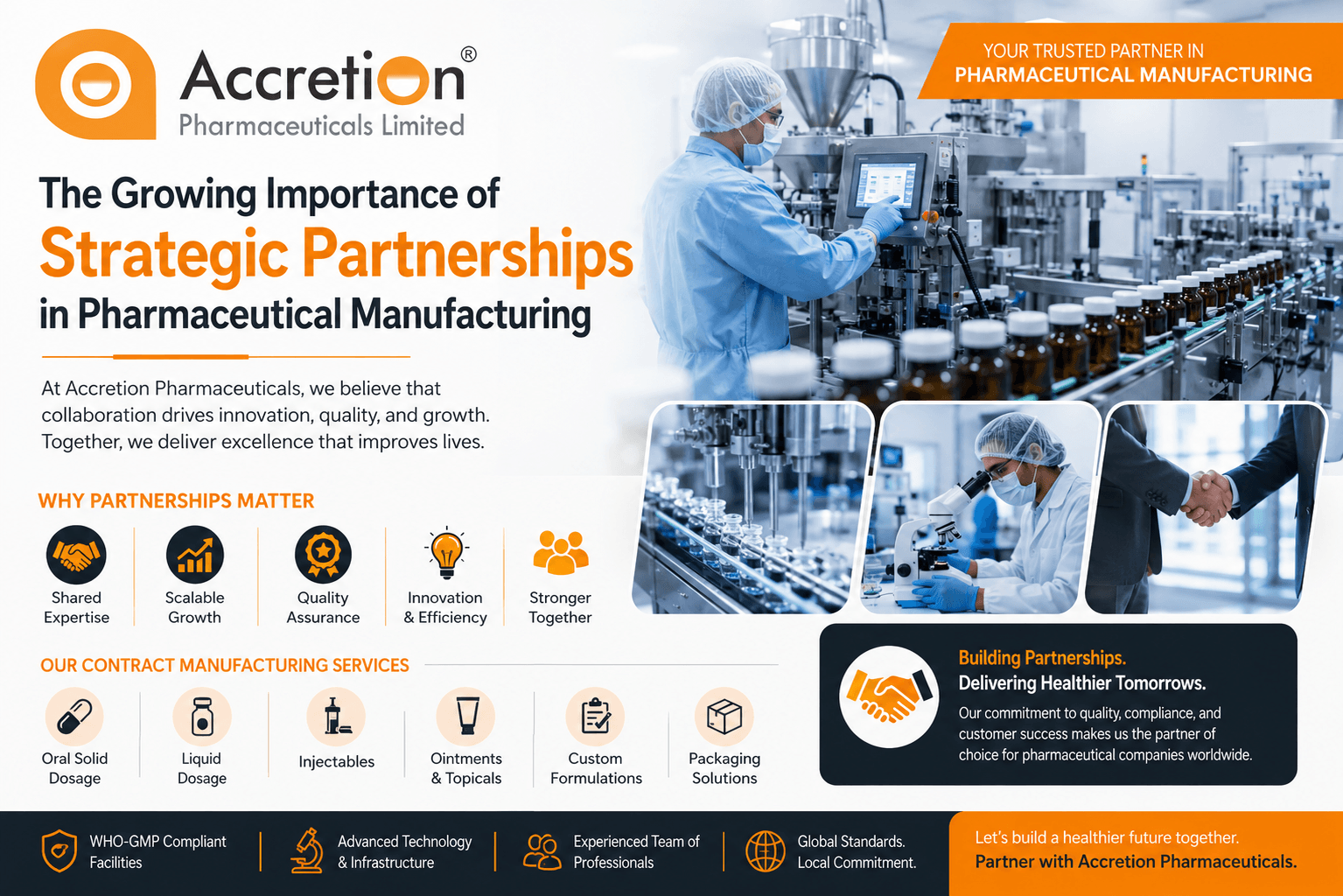
The pharmaceutical industry continues to evolve rapidly as healthcare demands, regulatory standards, and global production requirements increase. Companies today focus not only on research and innovation but also on efficient manufacturing systems that support quality, scalability, and operational consistency. Strategic manufacturing partnerships have become increasingly important for businesses seeking reliable production support and streamlined operations across the pharmaceutical sector.
Modern pharmaceutical manufacturing requires advanced infrastructure, quality control systems, regulatory compliance, and operational precision. This growing demand has strengthened the role of specialized manufacturing partnerships within the healthcare and pharmaceutical ecosystem.
Why Contract Manufacturing Supports Industry Growth
Pharmaceutical companies often collaborate with external manufacturing partners to improve efficiency, optimize production capacity, and maintain product quality standards. These partnerships allow businesses to focus on research, development, and market expansion while production processes are managed efficiently.
The role of a Contract Manufacturing company has become increasingly important in supporting pharmaceutical operations through organized production systems and quality-focused manufacturing practices.
Some important benefits of contract manufacturing include:
- Improved production efficiency
- Access to advanced manufacturing infrastructure
- Better scalability for growing demand
- Streamlined operational management
- Consistent quality control processes
As healthcare demands continue expanding, manufacturing partnerships remain essential for ensuring stable pharmaceutical supply and operational reliability.
The Role of Technology in Modern Pharmaceutical Operations
Technology has significantly transformed pharmaceutical manufacturing by improving production efficiency, monitoring systems, and process automation. Modern manufacturing environments increasingly depend on digital systems and advanced equipment to maintain precision and reduce operational risks.
Important technological advancements in pharmaceutical manufacturing include:
- Automated production systems
- Real-time quality monitoring
- Improved packaging technologies
- Enhanced inventory management
- Advanced testing and validation systems
These improvements help manufacturers maintain consistency while improving operational speed and reducing production errors. Technology-driven manufacturing systems also support better compliance with evolving regulatory standards.
Why Manufacturing Infrastructure Matters in the Pharmaceutical Sector
Manufacturing infrastructure plays a major role in determining production efficiency, product quality, and operational scalability. Well-organized facilities support better workflow management while ensuring compliance with pharmaceutical manufacturing regulations.
A reliable pharmaceutical contract manufacturing company typically focuses on maintaining advanced production environments, quality assurance systems, and efficient operational processes to support industry requirements.
Additional benefits of strong manufacturing infrastructure include:
- Better production management
- Reduced operational downtime
- Improved product consistency
- Enhanced quality assurance
- Greater scalability for market demand
As pharmaceutical demand grows globally, efficient manufacturing systems continue to be essential for maintaining reliable healthcare supply chains.
Emerging Trends in Pharmaceutical Manufacturing
The pharmaceutical sector is continuously evolving due to changing healthcare needs, technological innovation, and increasing regulatory expectations. Manufacturing practices are also adapting to improve efficiency and sustainability.
Some important trends shaping pharmaceutical manufacturing include:
Greater automation in production systems
Increased focus on quality assurance
Sustainable manufacturing practices
Advanced research and development support
Improved process optimization strategies
These developments are helping pharmaceutical manufacturers maintain operational efficiency while supporting long-term industry growth and healthcare accessibility.
Conclusion
Pharmaceutical manufacturing continues to play a vital role in supporting healthcare systems and ensuring the availability of quality medical products. As industry demands increase, efficient production systems, technological advancements, and reliable operational practices are becoming increasingly important across the pharmaceutical sector. The growing significance of Top Pharma Contract Manufacturers in Gujarat reflects the industry’s focus on scalable and quality-driven manufacturing solutions. Companies like Accretion Pharma contribute to this evolving pharmaceutical landscape by supporting organized manufacturing practices designed to meet modern healthcare and production requirements.
FAQs
Why is contract manufacturing important in the pharmaceutical industry?
Contract manufacturing helps pharmaceutical companies improve production efficiency, scalability, and operational management while maintaining quality standards.
What factors influence pharmaceutical manufacturing quality?
Important factors include quality control systems, regulatory compliance, skilled workforce, and advanced manufacturing infrastructure.
How does technology improve pharmaceutical manufacturing?
Technology improves automation, monitoring accuracy, production efficiency, and quality assurance processes.
Why is infrastructure important in pharmaceutical operations?
Strong infrastructure supports efficient workflow management, consistent production quality, and compliance with industry standards.