
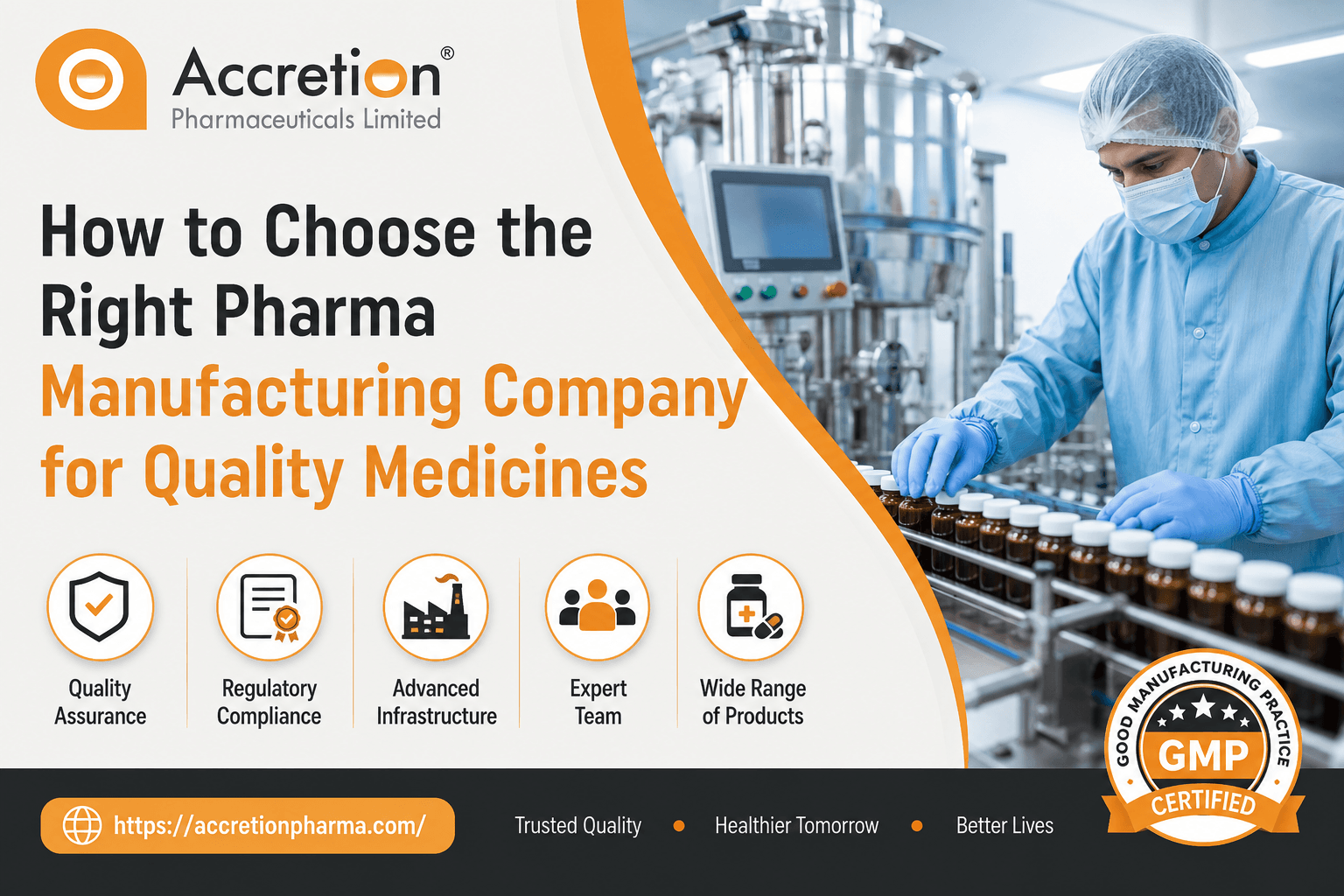
Selecting the right partner to produce medicines is one of the most important decisions for healthcare brands, distributors, and startups. Product safety, regulatory compliance, consistency, and timely delivery all depend on choosing a reliable organization with proven expertise. Whether you are launching a new product line or expanding an existing portfolio, evaluating capabilities beyond pricing is essential. Businesses looking for a pharma manufacturing company in ahmedabad should carefully assess quality standards, certifications, technical expertise, and long-term reliability before making a decision. A well-informed selection process helps reduce risks, maintain customer confidence, and support sustainable business growth.
Key Factors to Evaluate Before Choosing a Reliable Medicine Production Partner
Not every medicine production facility offers the same level of expertise or infrastructure. Comparing different service providers based on multiple factors ensures you receive consistent products that meet industry expectations. If you are researching pharmaceutical manufacturers in ahmedabad or exploring pharmaceutical manufacturing companies in ahmedabad, consider the following evaluation criteria.
Important Factors to Consider
Regulatory Compliance
- Verify compliance with national and international regulations.
- Ensure approvals from relevant health authorities.
- Check adherence to Good Manufacturing Practices (GMP).
Quality Assurance System
A dependable facility should maintain strict quality checks at every stage.
Regular testing of raw materials, in-process batches, and finished products helps maintain consistent standards.
Proper documentation improves traceability and accountability.
Modern Infrastructure
- Advanced production equipment reduces human error.
- Automated systems improve efficiency and product consistency.
- Cleanroom environments help maintain hygiene and safety.
Research and Development Support
- Strong R&D capabilities enable formulation improvements and innovation.
- Technical expertise helps develop products that meet changing market requirements.
- Continuous improvement contributes to better product performance.
Skilled Workforce
- Experienced scientists, pharmacists, engineers, and quality professionals contribute to reliable production.
- Regular employee training ensures updated knowledge of industry regulations and technologies.
- Product Range
Evaluate whether the facility produces tablets, capsules, syrups, injectables, ointments, powders, or specialized dosage forms.
A broader product portfolio supports future expansion.
Supply Chain Management
- Reliable sourcing of raw materials minimizes production delays.
- Efficient inventory systems ensure uninterrupted product availability.
Transparency
- Open communication regarding timelines, documentation, and production updates builds trust.
- Clear agreements reduce misunderstandings during long-term collaborations.
Comparison Table: What to Check Before Finalizing a Partner
| Evaluation Factor | Why It Matters | What to Verify |
| Regulatory Certifications | Ensures legal compliance | GMP, ISO, applicable approvals |
| Quality Control | Consistent medicine quality | Laboratory testing procedures |
| Production Capacity | Supports future demand | Monthly output capability |
| Technical Expertise | Improves product reliability | Experienced professionals |
| Infrastructure | Maintains product consistency | Modern machinery and clean facilities |
| Documentation | Simplifies audits | Batch records and traceability |
| Delivery Performance | Prevents supply disruptions | On-time delivery history |
| Customer Support | Enhances collaboration | Responsive communication |
Choosing a partner based solely on pricing may lead to hidden costs later, including delayed deliveries, inconsistent product quality, or regulatory issues. A balanced evaluation of operational capabilities and quality standards provides greater long-term value.
Another important consideration is the sourcing of raw materials. High-quality ingredients directly influence the effectiveness, stability, and safety of finished medicines. Organizations with established supplier qualification processes generally maintain stronger consistency throughout production.
Packaging standards should also receive attention. Proper packaging protects medicines from contamination, moisture, temperature fluctuations, and physical damage during transportation and storage. Secure labeling and accurate product information improve patient safety while meeting regulatory expectations.
Technology adoption has become another differentiating factor. Digital monitoring systems, automated inspection equipment, and electronic documentation reduce manual errors while improving operational efficiency. Facilities investing in modern technology often deliver better consistency across production batches.
Scalability is equally valuable for growing healthcare brands. As product demand increases, the chosen production partner should have sufficient capacity to expand output without affecting quality. This flexibility minimizes disruptions and supports future business growth.
Risk management practices also deserve careful evaluation. Reliable organizations implement preventive maintenance programs, emergency response procedures, and contamination control systems to reduce operational risks. These practices help ensure continuous production even during unexpected situations.
Environmental responsibility is increasingly important within the healthcare sector. Facilities that follow responsible waste disposal methods, energy-efficient operations, and sustainable production practices demonstrate commitment to environmental protection while supporting regulatory compliance.
Communication plays a significant role in maintaining successful long-term partnerships. Regular progress updates, prompt responses to technical questions, and transparent reporting contribute to smoother project execution. Strong collaboration often results in faster problem resolution and improved operational efficiency.
Businesses should also review previous client experience and overall market reputation. Long-standing relationships, consistent delivery records, and positive customer feedback indicate reliability. Although every project has unique requirements, a proven history of maintaining quality standards often reflects organizational stability.
Intellectual property protection may be another priority, particularly for proprietary formulations or private-label products. Confidentiality agreements, secure documentation practices, and controlled access to sensitive information help safeguard valuable business assets.
Financial stability should not be overlooked either. Organizations with stable operations are generally better positioned to invest in equipment upgrades, employee training, and regulatory compliance. Financial strength contributes to uninterrupted production and long-term partnership reliability.
Routine audits provide additional confidence before entering into a business relationship. Site visits allow buyers to evaluate cleanliness, equipment condition, documentation systems, quality laboratories, and employee practices firsthand. Direct observation often reveals operational strengths that may not be evident through marketing materials alone.
Finally, consider long-term compatibility rather than immediate cost savings. A dependable production partner supports business expansion, maintains consistent quality, adapts to evolving regulations, and contributes to customer satisfaction over time. Investing effort during the selection process reduces operational risks while strengthening supply chain resilience.
Conclusion
Choosing the right medicine production partner requires careful evaluation of quality systems, regulatory compliance, technical capabilities, infrastructure, transparency, workforce expertise, and long-term reliability. Organizations that prioritize these factors are more likely to receive consistent products, dependable service, and sustainable business support. For businesses comparing the best pharmaceutical companies in ahmedabad Gujarat, focusing on proven quality standards, operational excellence, and ethical practices is far more valuable than considering cost alone. A thoughtful selection process creates a strong foundation for delivering safe, effective, and reliable medicines to the market.