
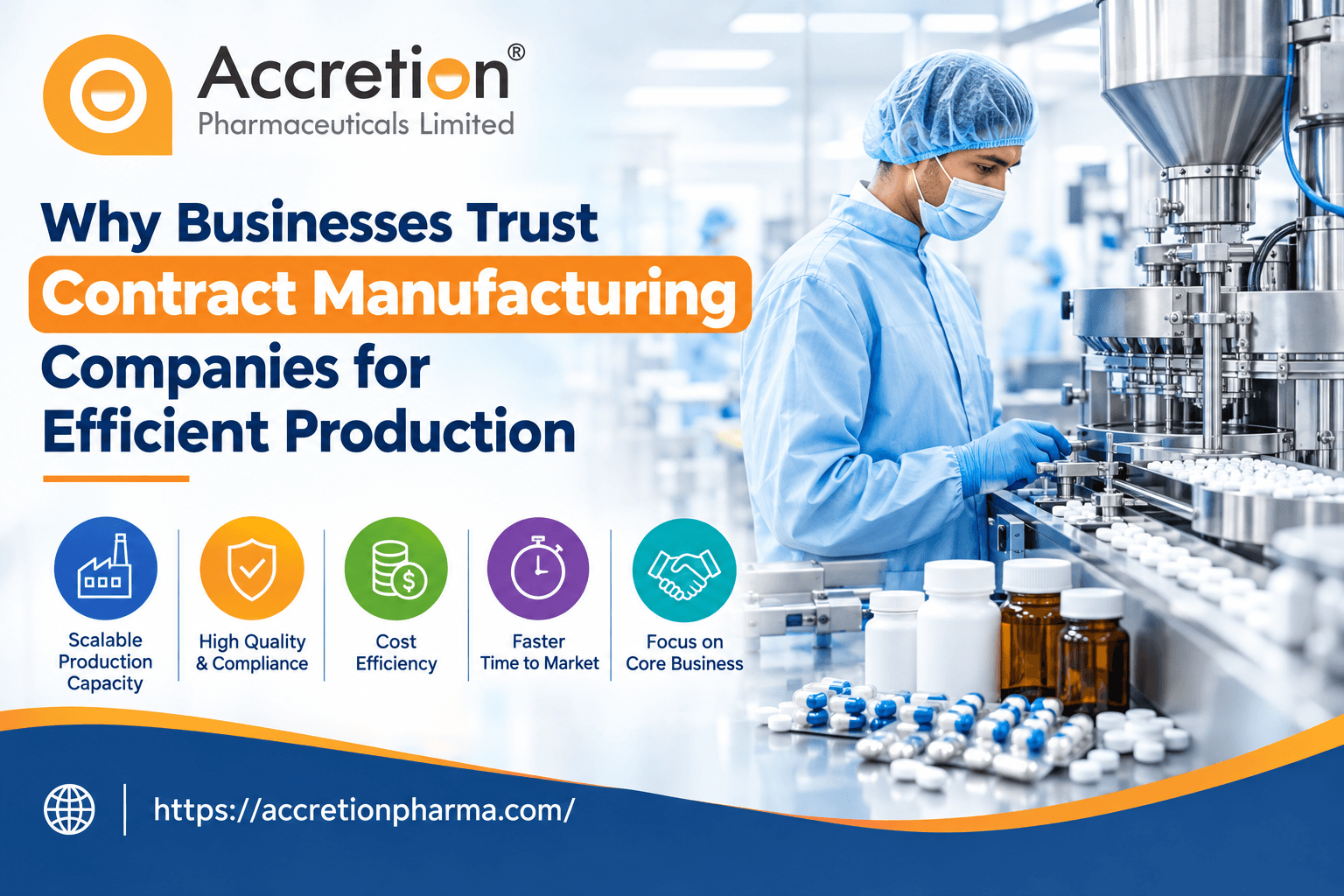
Businesses across industries face increasing pressure to maintain product quality, control operating costs, and deliver products on time. Building and managing an in-house manufacturing facility requires substantial investment in machinery, infrastructure, skilled employees, and quality control systems. For many businesses, outsourcing production offers a practical alternative that supports growth without the burden of managing every manufacturing activity internally.
A Contract Manufacturing company helps businesses produce goods according to agreed specifications, quality requirements, and production schedules. By working with experienced manufacturing partners, companies can access specialized expertise, improve operational flexibility, and focus on product development, marketing, and customer relationships. Understanding how this business model works helps organizations make informed decisions about production capacity, supplier reliability, and long-term competitiveness.
Why Do Businesses Trust Contract Manufacturing Companies?
Businesses trust contract manufacturing companies because they provide access to specialized production capabilities, established manufacturing processes, skilled professionals, and quality control systems without requiring companies to build their own facilities. This approach can reduce upfront investment, improve production flexibility, and help businesses respond to changing market demand when the right manufacturing partner is selected.
What Is Contract Manufacturing?
Contract manufacturing is a business arrangement in which one company hires another manufacturer to produce products or components according to predefined specifications. The agreement generally establishes responsibilities for production, quality assurance, delivery schedules, pricing, and intellectual property protection.
Depending on the industry, the manufacturer may handle raw material procurement, processing, assembly, packaging, testing, or finished-product delivery. The hiring company typically retains responsibility for areas such as branding, marketing, distribution, and customer relationships, although these responsibilities can vary by agreement.
For example, a pharmaceutical business may outsource the production of tablets or capsules to a qualified facility rather than establish its own manufacturing plant. Similarly, an industrial equipment company may engage an external manufacturer to produce specialized components.
Why Do Businesses Choose Contract Manufacturing Companies?
1. Lower Initial Investment
Establishing a manufacturing facility involves considerable expenditure on equipment, factory space, utilities, employee training, and maintenance. Outsourcing can help businesses avoid some of these upfront costs.
Instead of investing heavily in production infrastructure, companies can allocate resources to research, product development, sales, and distribution. However, the actual savings depend on order volumes, manufacturing rates, logistics expenses, and contractual commitments.
Businesses should compare the complete cost of outsourcing with the total cost of in-house production before making a decision.
2. Access to Specialized Expertise
Manufacturing products consistently requires technical knowledge, trained personnel, suitable machinery, and established operating procedures. An experienced manufacturing partner may already possess these capabilities.
This expertise can be particularly valuable when products require specialized processing, controlled production environments, technical testing, or industry-specific documentation.
Before selecting a partner, businesses should assess its equipment, employee qualifications, manufacturing experience, quality management practices, and ability to meet product specifications.
3. Improved Production Efficiency
Established manufacturers often use standardized workflows, production planning systems, preventive maintenance, and quality checks to manage manufacturing operations.
These processes can reduce avoidable downtime, improve material utilization, and support consistent output. Businesses may also benefit from production capacity that would take considerable time and investment to develop independently.
Nevertheless, efficiency depends on realistic production schedules, reliable raw material availability, and effective communication between both parties.
4. Flexible Production Capacity
Market demand rarely remains constant throughout the year. A business may experience seasonal demand, sudden increases in orders, or changes in product specifications.
Contract manufacturing can provide access to additional capacity without requiring the hiring company to expand its own facility immediately. This flexibility is especially useful for growing businesses that need to test new products or enter additional markets.
Companies should confirm minimum order quantities, maximum production capacity, lead times, and procedures for managing urgent orders before signing an agreement.
How Does Contract Manufacturing Support the Pharmaceutical Industry?
Pharmaceutical manufacturing requires careful management of product quality, safety, documentation, and regulatory compliance. Outsourcing in this sector therefore involves more than simply finding a supplier with available production capacity.
A pharma contract manufacturing company in India may provide services such as formulation development, tablet and capsule manufacturing, liquid preparations, packaging, and batch documentation, depending on its approved capabilities and applicable licences.
Businesses evaluating pharmaceutical manufacturing partners should consider the following factors:
- Regulatory compliance: Verify the manufacturer’s applicable licences, product permissions, and compliance with relevant requirements established by Indian drug regulators.
- Quality assurance: Review quality management procedures, batch testing, deviation handling, and corrective and preventive actions.
- Manufacturing capabilities: Confirm that the facility is authorized and equipped to manufacture the required dosage form.
- Documentation: Establish how batch records, test results, product specifications, and release documents will be maintained and shared.
In India, the Central Drugs Standard Control Organisation (CDSCO) and State Drug Control authorities have regulatory responsibilities under the applicable pharmaceutical framework. Requirements vary according to the product, manufacturing activity, and applicable rules.
What Should Businesses Evaluate Before Choosing a Manufacturing Partner?
Selecting a manufacturing partner requires a structured assessment of technical, commercial, and operational factors. A competitive quotation alone does not establish that a supplier is suitable.
1. Manufacturing Capacity and Technology
Check whether the manufacturer has the equipment, production space, workforce, and technical capabilities required for the proposed product. Ask about capacity utilization and how existing customer commitments could affect your production schedule.
2. Quality Management Systems
Review inspection procedures, material traceability, testing capabilities, nonconformance management, and complaint-handling processes. Where appropriate, examine relevant certifications and audit records instead of relying solely on verbal assurances.
3. Commercial Transparency
Request a detailed quotation that identifies production charges, raw material costs, packaging, testing, tooling, transportation, taxes, and other applicable expenses.
Clarify payment terms, price revision conditions, minimum order quantities, and responsibility for defective products. Transparent costing makes it easier to evaluate the true financial value of the arrangement.
4. Communication and Reliability
A dependable supplier should communicate production progress, identify potential delays early, and provide a clear escalation process when problems occur.
Businesses should also evaluate the manufacturer’s contingency plans for equipment failure, labour shortages, raw material disruptions, and unexpected demand changes.
Why Is a Pharma Contract Manufacturing Company Important for Business Growth?
Working with a pharma contract manufacturing company can help pharmaceutical businesses expand their product portfolios without immediately investing in additional manufacturing infrastructure. It may also provide access to established production capabilities and technical resources.
However, pharmaceutical companies must retain appropriate oversight of product quality and regulatory responsibilities. Outsourcing manufacturing does not automatically transfer every legal obligation away from the marketing authorization holder or contracting business.
A sound partnership should clearly define responsibilities for product specifications, approved suppliers, testing, batch release, change control, complaints, product recalls, and record retention.
For instance, if a company plans to introduce a new tablet formulation, it should confirm that the selected facility can legally manufacture the product, validate the applicable processes, and maintain the required documentation before commercial production begins.
Contract Manufacturing vs. In-House Manufacturing
The right production model depends on business size, product complexity, expected demand, and available capital.
| Evaluation factor | Contract manufacturing | In-house manufacturing |
|---|---|---|
| Initial investment | Often lower infrastructure investment | Higher facility and equipment investment |
| Operational control | Shared according to the agreement | Greater direct operational control |
| Production capacity | Access to an external facility’s capacity | Depends on owned infrastructure |
| Technical expertise | Access to the partner’s capabilities | Requires internal recruitment and development |
| Cost structure | Supplier charges and contract-related costs | Fixed overheads and operating expenses |
| Flexibility | Depends on capacity and contract terms | Depends on internal resources and equipment |
| Quality oversight | Requires supplier evaluation and monitoring | Managed directly within the organization |
Neither model is universally superior. Outsourcing may suit businesses seeking flexibility and lower capital commitments, while in-house production may be preferable when proprietary processes, close operational control, or predictable high-volume production justify the investment.
Expert Insights: Best Practices for a Successful Partnership
Businesses can reduce manufacturing risks by establishing clear expectations before production starts.
Conduct proper due diligence. Verify the manufacturer’s legal identity, relevant licences, financial stability, references, technical competence, and quality systems. Arrange a facility audit when the product or regulatory environment warrants it.
Use a detailed manufacturing agreement. Document product specifications, acceptable quality limits, delivery schedules, inspection rights, confidentiality, intellectual property ownership, liability, and dispute resolution. Include provisions for handling rejected batches and unexpected production interruptions.
Establish measurable performance indicators. Monitor on-time delivery, defect rates, batch rejection, production lead times, and complaint resolution. Review these measures regularly to identify recurring problems.
Protect intellectual property. Use appropriate confidentiality agreements and clearly define ownership of formulations, designs, tooling, technical documents, and manufacturing improvements.
Plan for supply chain disruptions. Evaluate the availability of critical raw materials and consider alternative suppliers or qualified backup production arrangements where practical.
For pharmaceutical manufacturing, also verify applicable Good Manufacturing Practice (GMP) requirements and relevant provisions of the Drugs and Cosmetics Act, 1940, and Drugs Rules, 1945, as amended. Applicable requirements should be confirmed for the specific product and manufacturing activity.
Key Takeaways
- Contract manufacturing provides access to external production capabilities without requiring every business to establish its own factory.
- Potential benefits include lower upfront infrastructure investment, specialized expertise, and adaptable production capacity.
- Quality, regulatory compliance, communication, and supplier reliability are essential selection criteria.
- Detailed agreements help clarify pricing, intellectual property, product quality, delivery obligations, and liability.
- Businesses should compare total costs and operational risks before choosing outsourcing over in-house production.
Conclusion
Contract manufacturing has become a practical production strategy for businesses seeking operational efficiency, technical expertise, and opportunities for growth. The benefits depend on selecting a qualified partner, defining clear contractual responsibilities, and maintaining appropriate oversight of quality, costs, and delivery performance.
When evaluating a Contract Manufacturing company, businesses should prioritize verified capabilities, transparent commercial terms, dependable communication, and compliance with relevant industry requirements. Organizations exploring a Contract Manufacturing Services Company in Ahmedabad can apply the same evaluation criteria to assess local manufacturing capabilities against their specific needs. Learning more about the services and quality practices offered by established manufacturers, such as Accretion Pharma, can help businesses make informed decisions about their production requirements.